and Expansion Project
My life is my message.
– M K Gandhi
The quaint little Gandhi Ashram, located on the western bank of Sabarmati in Ahmedabad, was established by Gandhiji himself in 1917, when he decided to make it his Karmabhoomi. During this period, it was the centre of his experiments in constructive work, education, Satyagraha and his own spiritual quest. Gandhji stayed here till 1930.
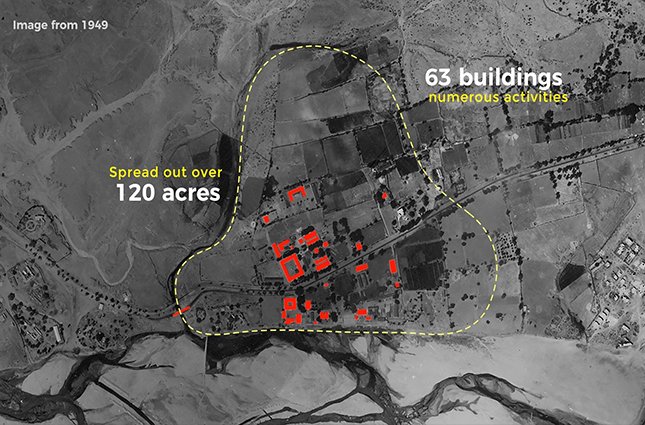
When it was established, Gandhi Ashram was spread out over 120 acres of land with 63 buildings housing various activities of the Ashram.
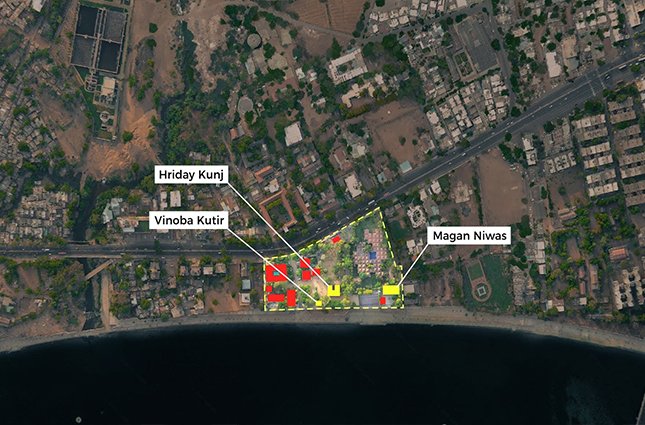
The Gandhi Ashram that people are able to visit and be inspired by today is merely a small part of the original Ashram. It is spread across a mere 5 acres of land, with only 3 of the original buildings open for visitors.
Many of the original buildings have either been torn down or lie across the busy and noisy Ashram Road, in a dilapidated condition. The 3 original buildings, namely Hriday Kunj, Vinoba-Mira Kutir and Magan Nivas are brilliantly representing the life and philosophy of Gandhiji. The Gandhi Smarak Sangrahalaya along with the three original buildings serve as a deeply inspiring destination for every seeker.
Though being limited in size, Gandhi Ashram is still one of the most visited places in India. It receives an average of 3,000 visitors daily and over 10,000 on special occasions. Many of these are school
children from across Gujarat and other states. The Ashram also periodically receives heads of states and other very prominent personalities. Mahatma Gandhi holds immense significance for India. Despite this, there is nowhere in the country a truly fitting memorial to him, nor a place where an uninformed visitor can get a full measure of the meaning and significance of his life, work, philosophy, and message to the world.
It is also true that India can do much better than this in memorialising Gandhiji and conveying his message to future generation. The meagre extent of today’s Gandhi Ashram and the fact that most of the original buildings lie outside the Ashram leads to the visitors getting an incomplete sense of how the original Ashram functioned and how it embodied Gandhiji’s philosophy.

Restoring, Expanding & Celebrating Gandhiji’s Ashram
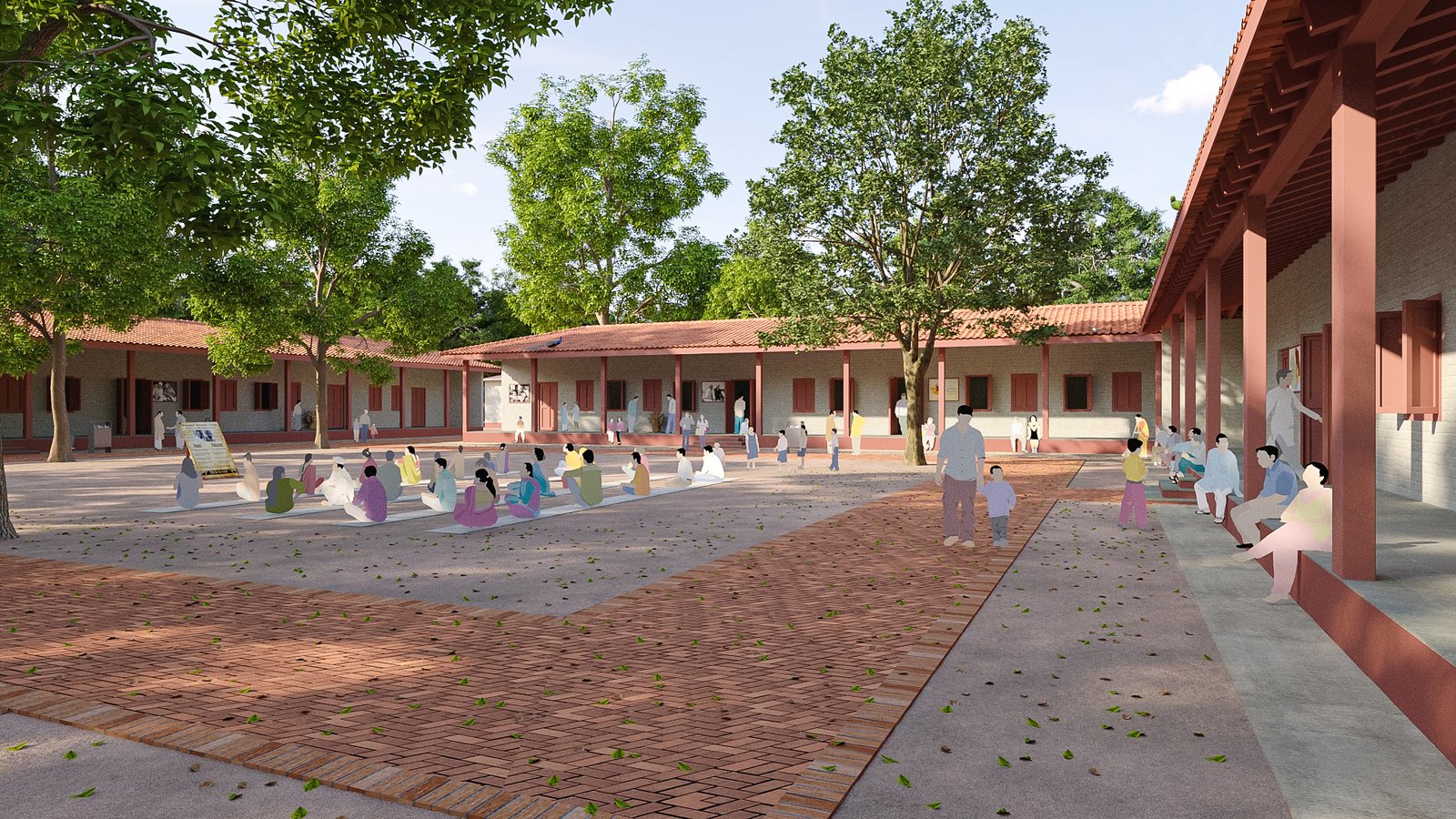
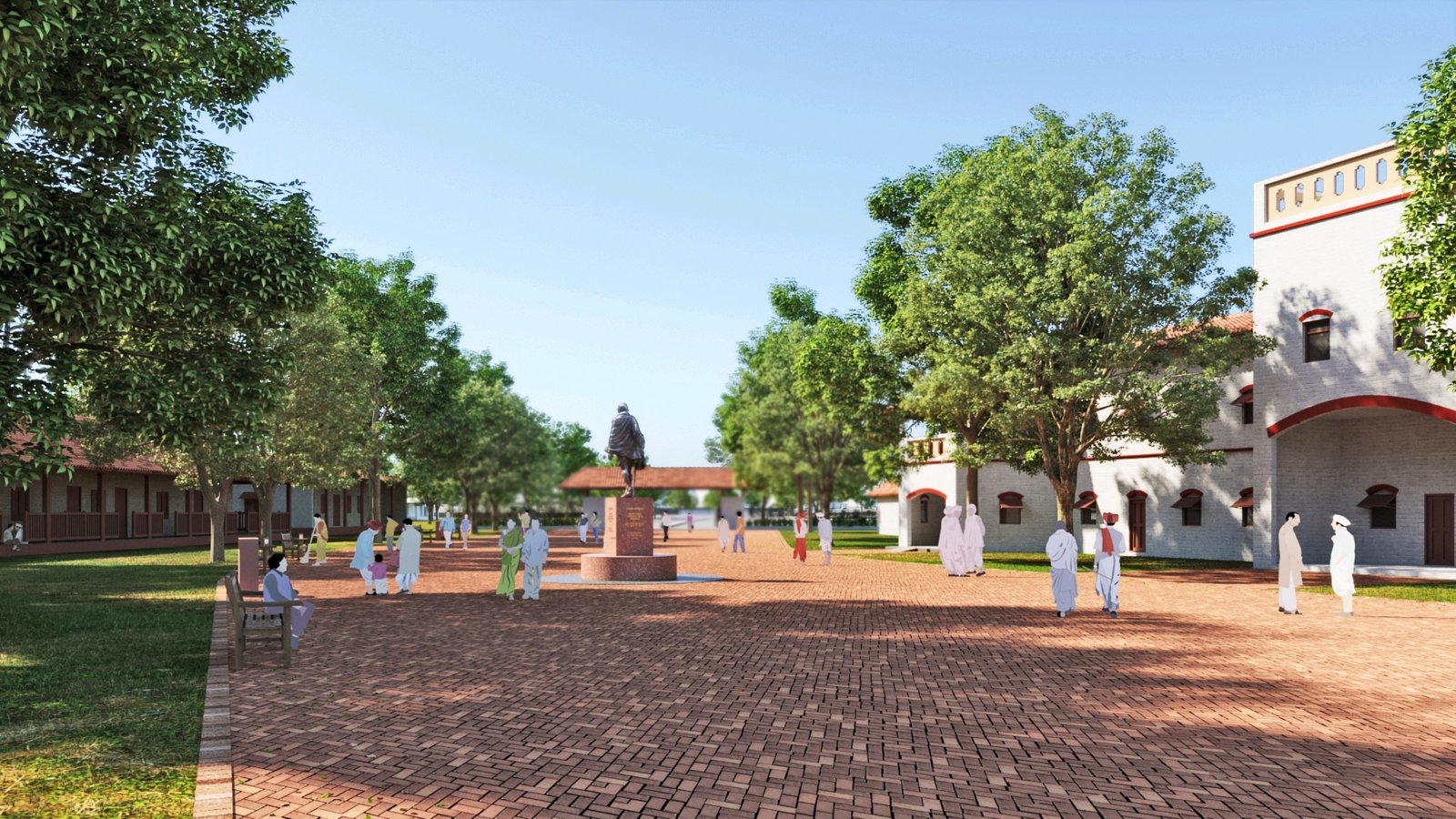
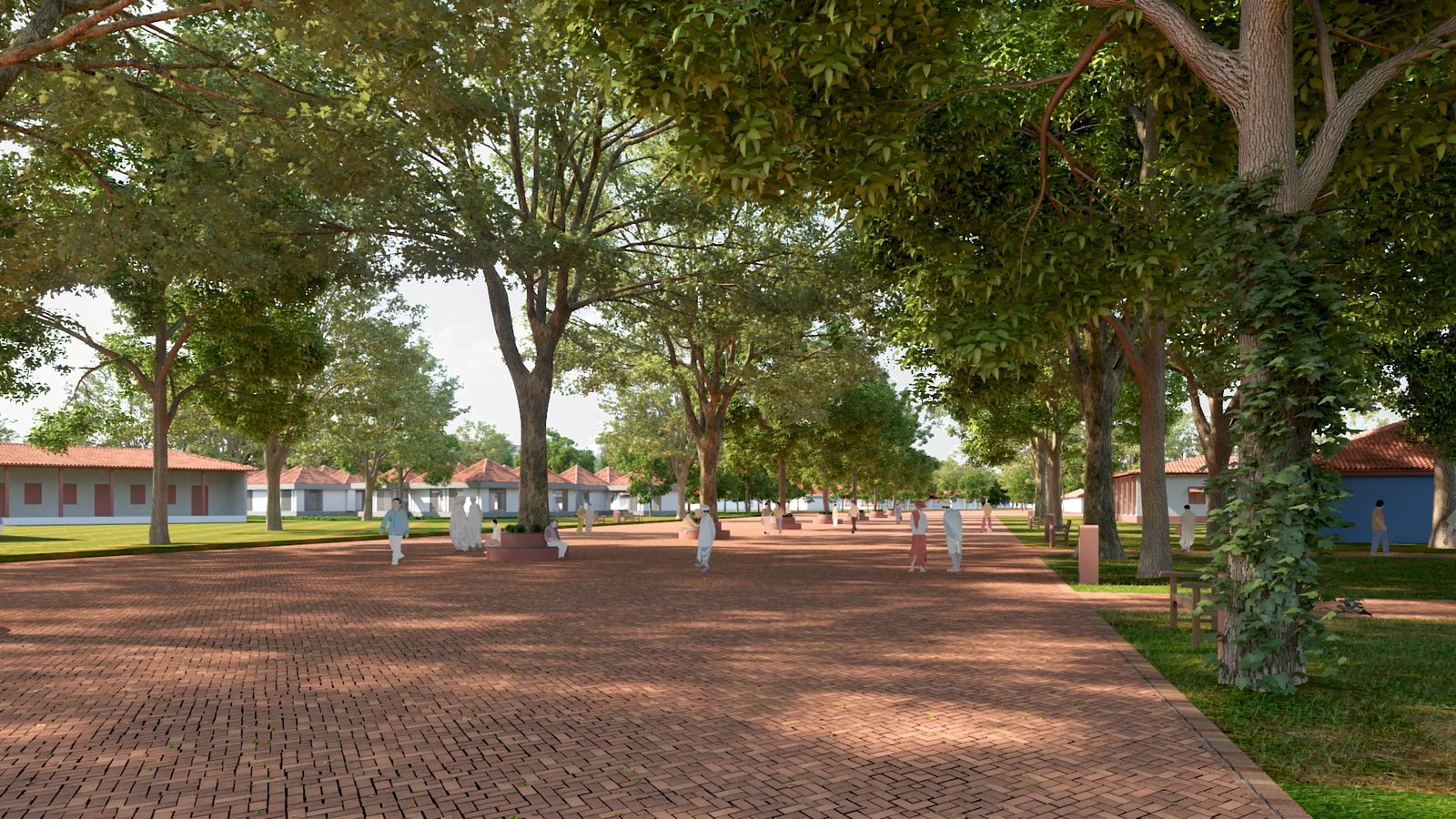
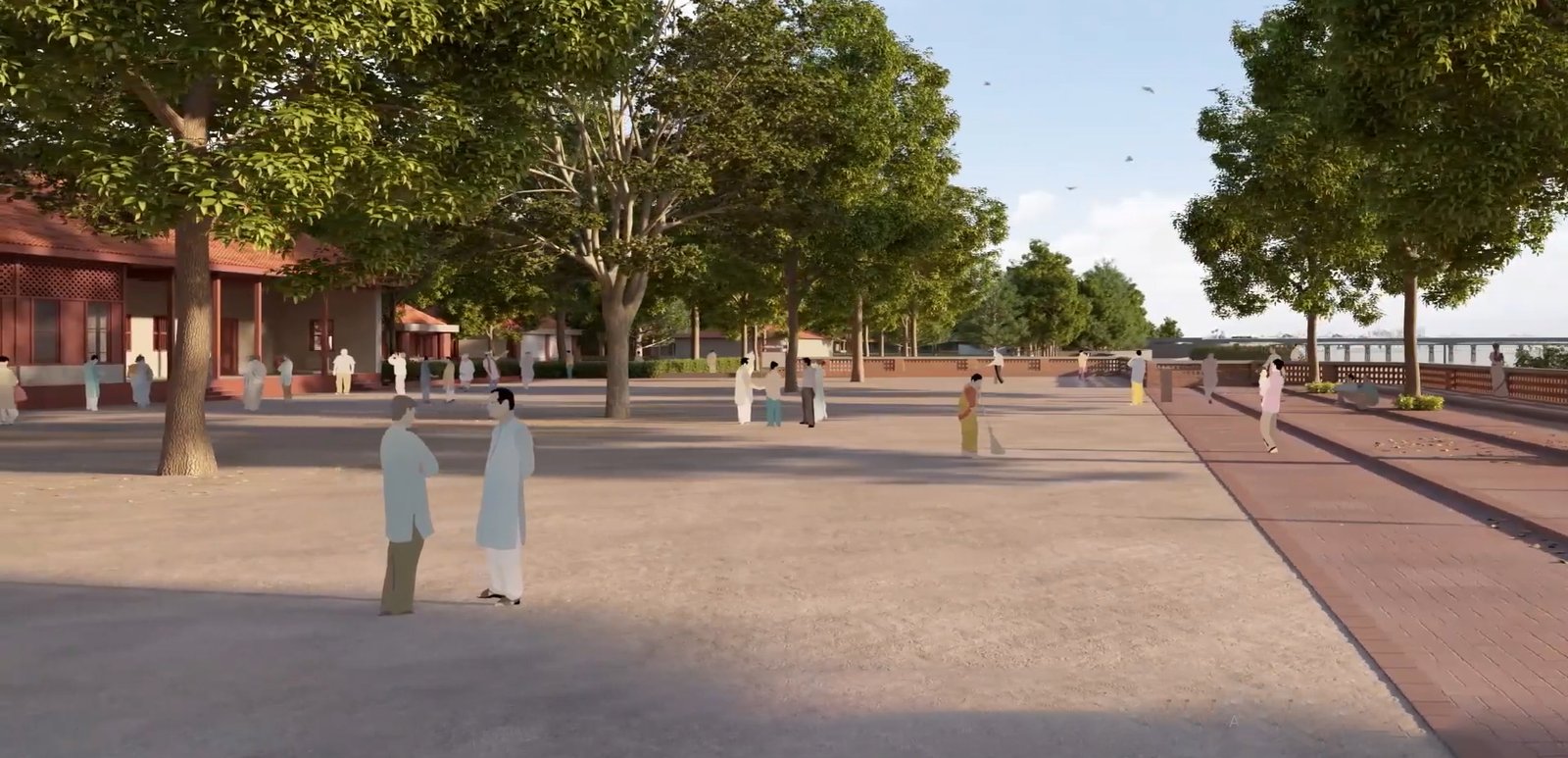
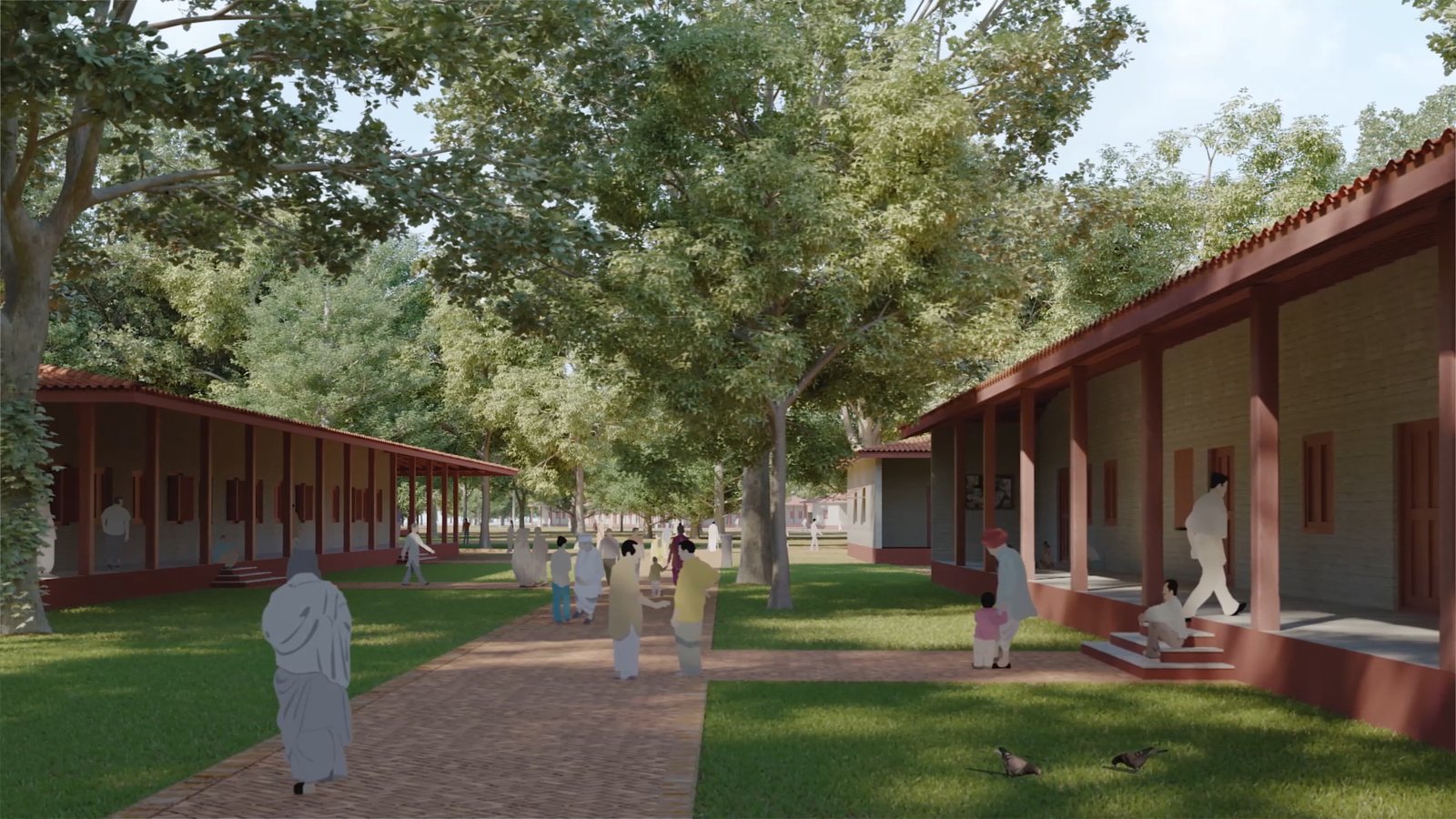
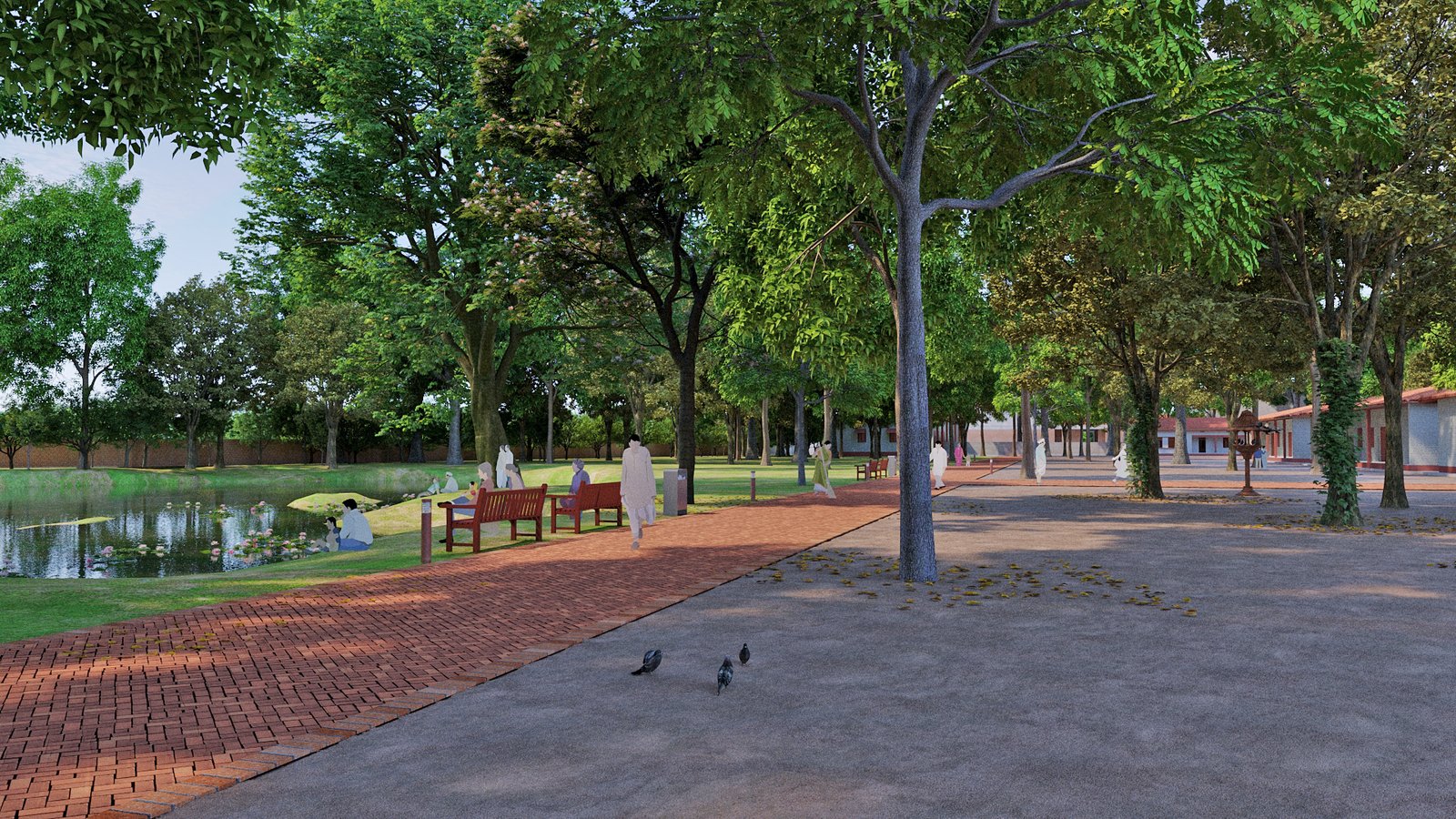
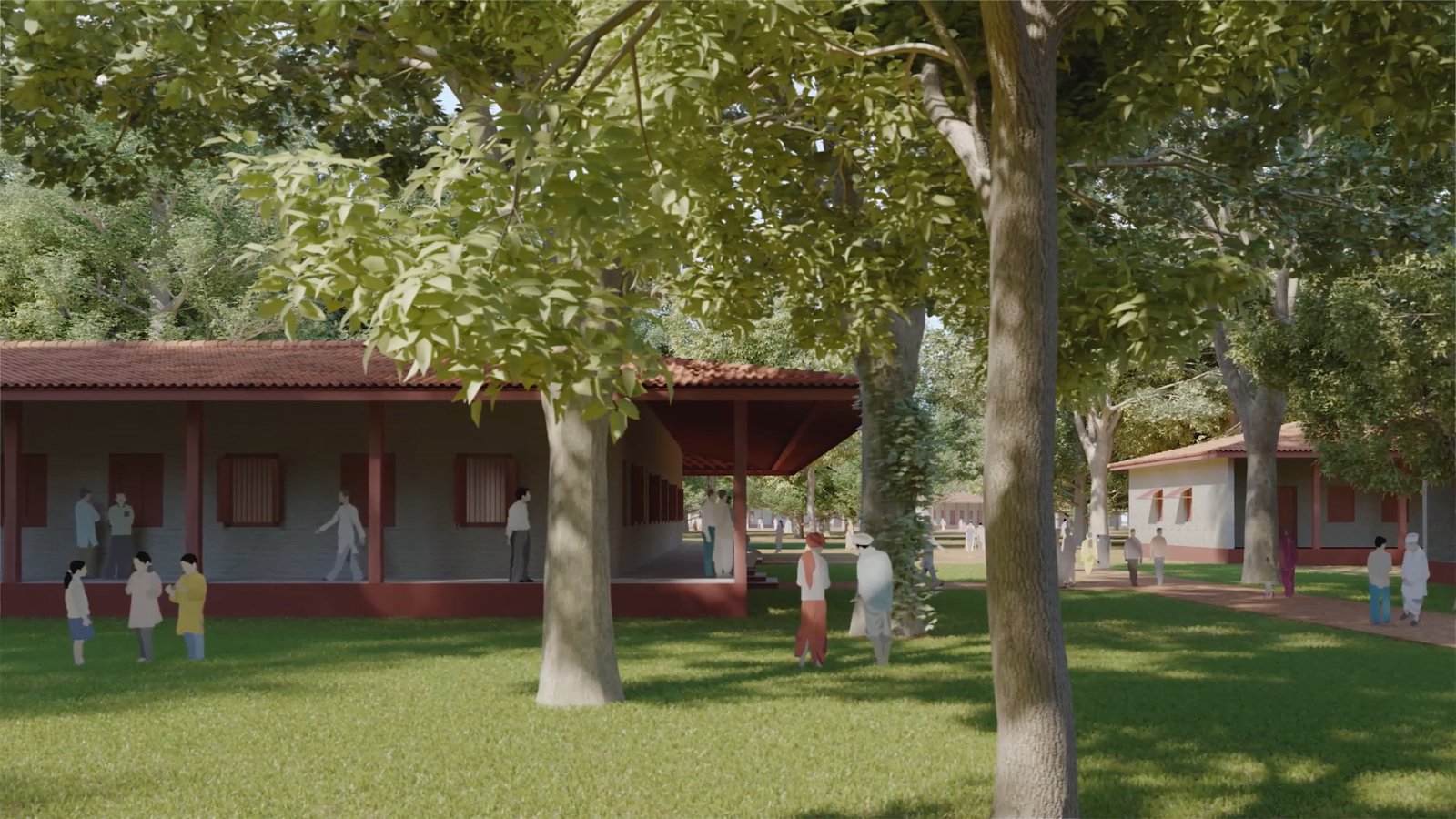
During the 75th year of India’s independence, the Government of India resolved to restore Gandhi Ashram in a way that preserves the ethos of the original ashram. It will be done in a carefully planned manner in order to maintain the austere, simple and authentic architecture of the ashram established and envisioned by Gandhiji.
- The original buildings which are currently either in a dilapidated condition or are being used for other incongruous activities will be carefully restored and brought alive for everyone to visit and be inspired by.
- A few new museums and exhibits will be added to display Gandhiji’s life and work.
- Gandhi Ashram Archives and Library will be better housed, and facilities will be created for research and training.
- Existing amenities will be augmented to support the continually increasing number of visitors.
- All of these will be done in a way that preserves the ethos and sanctity of the original ashram and the iconic Gandhi Smarak Sanghralaya designed by Charles Correa.
1949- Satellite Imagery
The Original Ashram Extents
Gandhiji chose the western bank of Sabarmati in Ahmedabad, Gujarat to establish his ashram, his karmabhoomi. Its land measured about 120 acres with 63 buildings. Within this area, the ashram’s various buildings were spread out over about 50 acres.
The Ashram Today
Only 3 original buildings remain in this ashram, along with the truly inspiring Gandhi Smarak Sangrahalaya designed by Charles Correa. Rest of the buildings are either torn down or are in dilapidated condition on both sides of the busy Ashram Road.
2021- Satellite Imagery
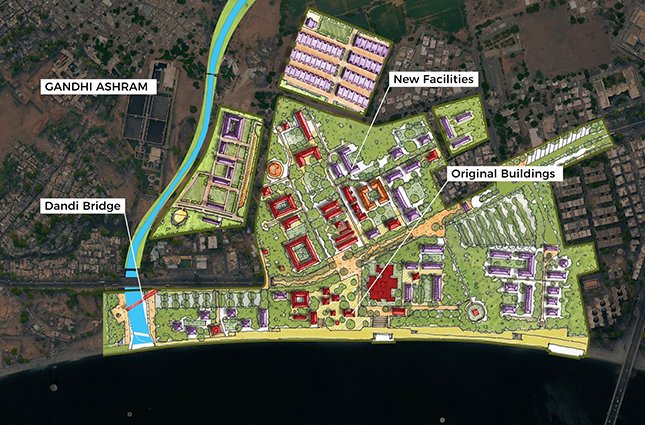
Master Plan
Gandhi Ashram Restoration and Expansion Project
The project seeks to undo the fragmentation of ashram activities and land by expanding the campus from 5 acres to 55 acres, to include all 36 original buildings of the ashram. It aims to recreate the ashram’s original tranquil environment while augmenting its facilities for visitors to be able to better understand Mahatma Gandhi’s life at the ashram and his philosophy.

Status of The Project
The restoration and expansion of Gandhi Ashram are progressing steadily, with the work divided into multiple tenders to carefully restore all 36 original buildings of the ashram. The project is expected to be completed by June 2026.Â
| No. of Buildings | Status | Date of Inception | Date of Completion |
|---|---|---|---|
| 04 | Under execution | June 2024 | March 2025 |
| 04 | Under execution | September 2024 | September 2025 |
| 06 | Under execution | October 2024 | September 2025 |
| 09 | Tenders invited | December 2024 | September 2025 |
| 05 | Tender under preparation | January 2025 | September 2025 |
| 08 | Tender under preparation | January 2025 | October 2025 |


MAHATMA GANDHI SABARMATI ASHRAM MEMORIAL
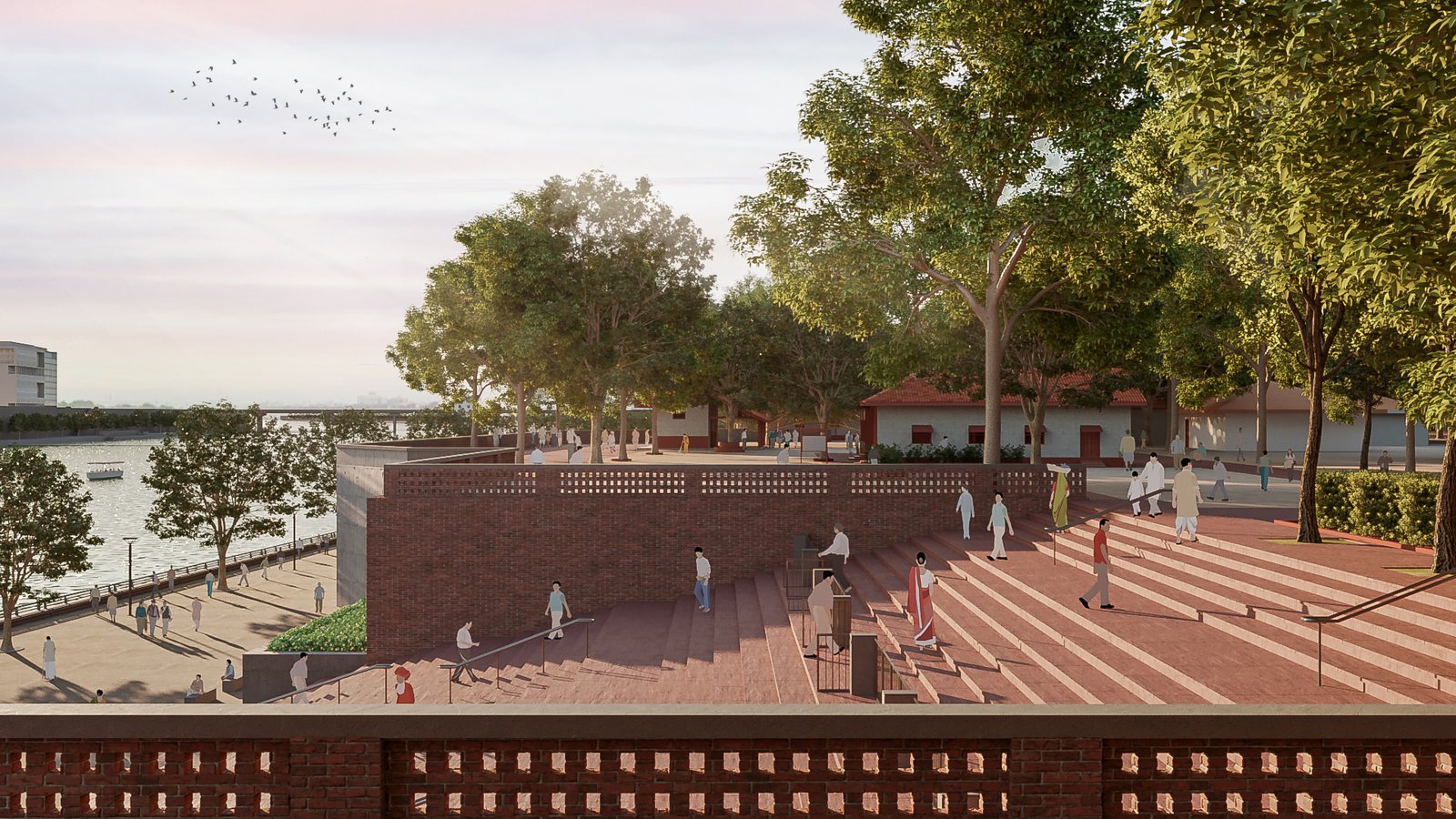
The Ashram Road passing through the memorial’s area will be severed and diverted to bring back the peaceful environment of Gandhiji’s ashram. The Sabarmati Ashram memorial will be restored to its original extent of 55 acres working in tandem with the various Trusts operating at the premises, housing the activities originally planned by Mahatma Gandhi.
RELOCATING ACTIVITIES IN SATELLITE CAMPUSES
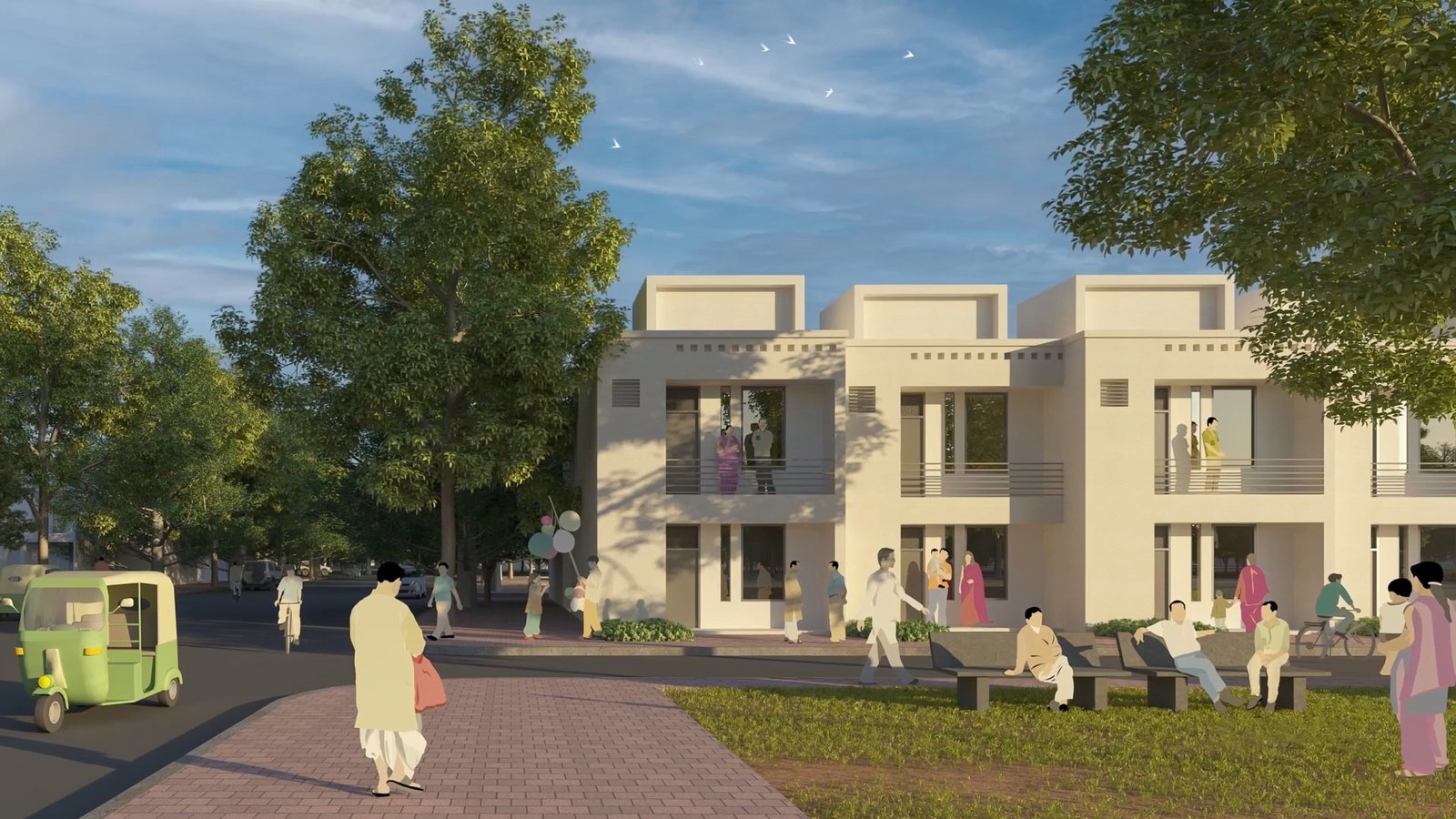
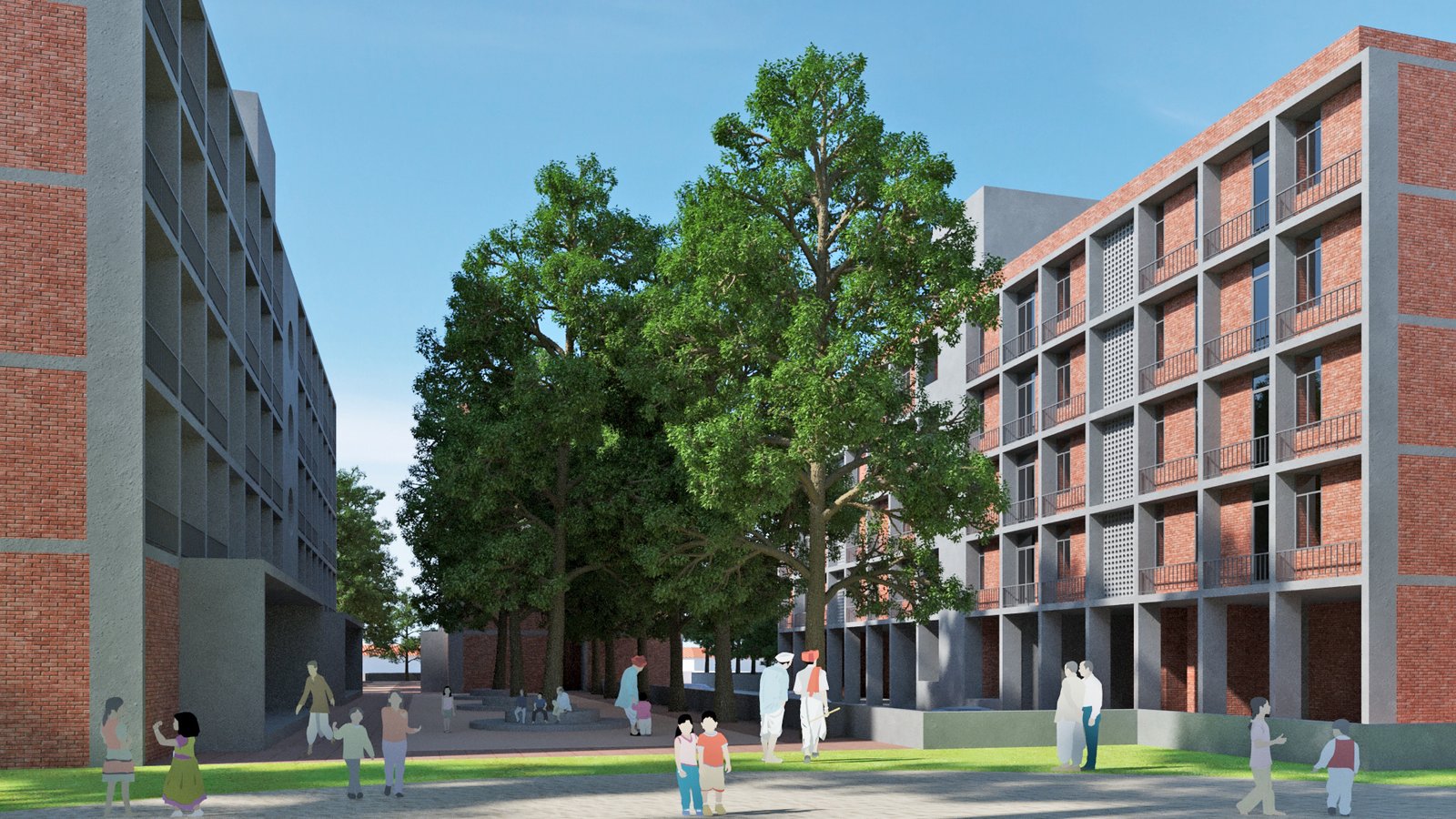
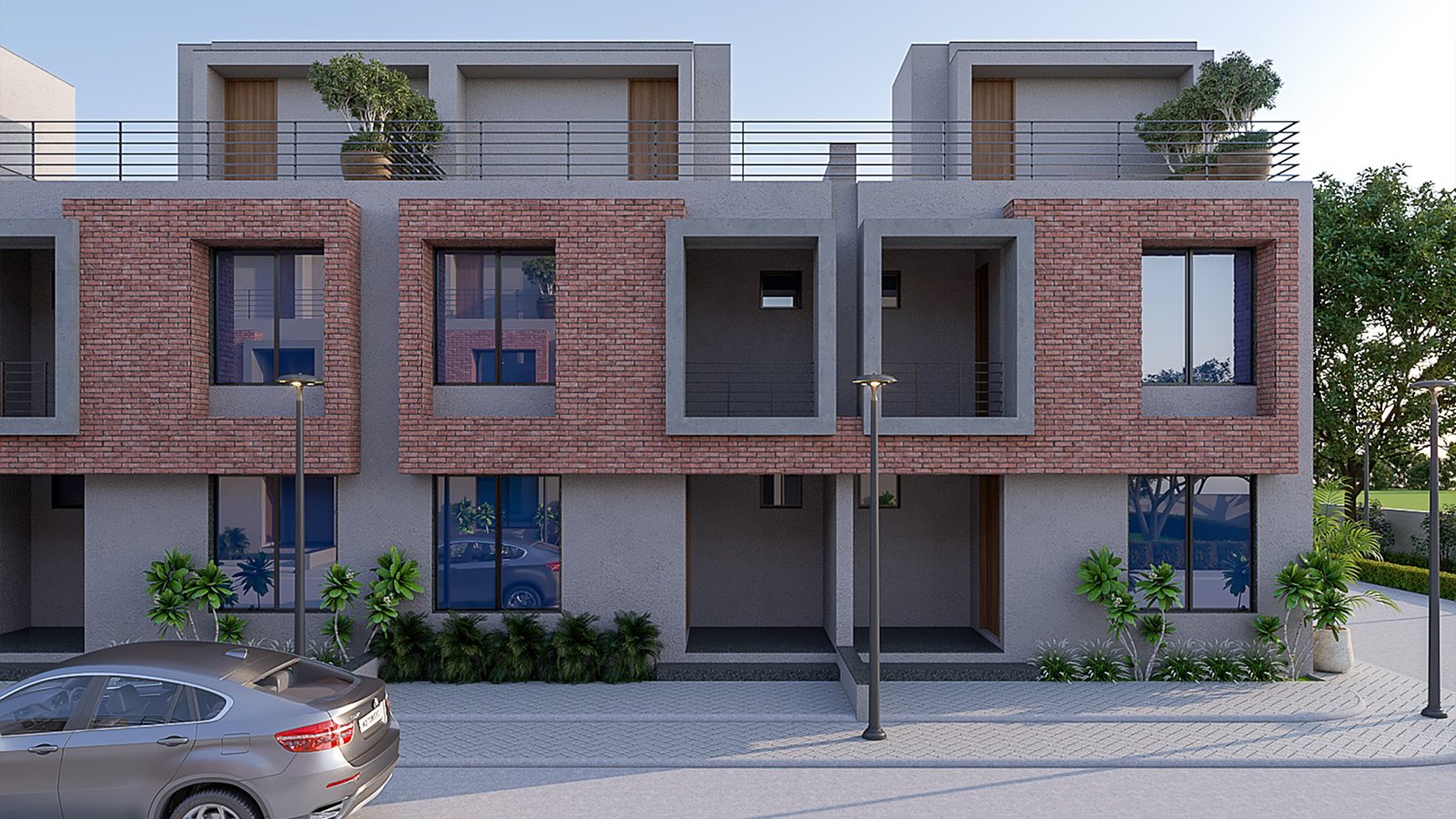
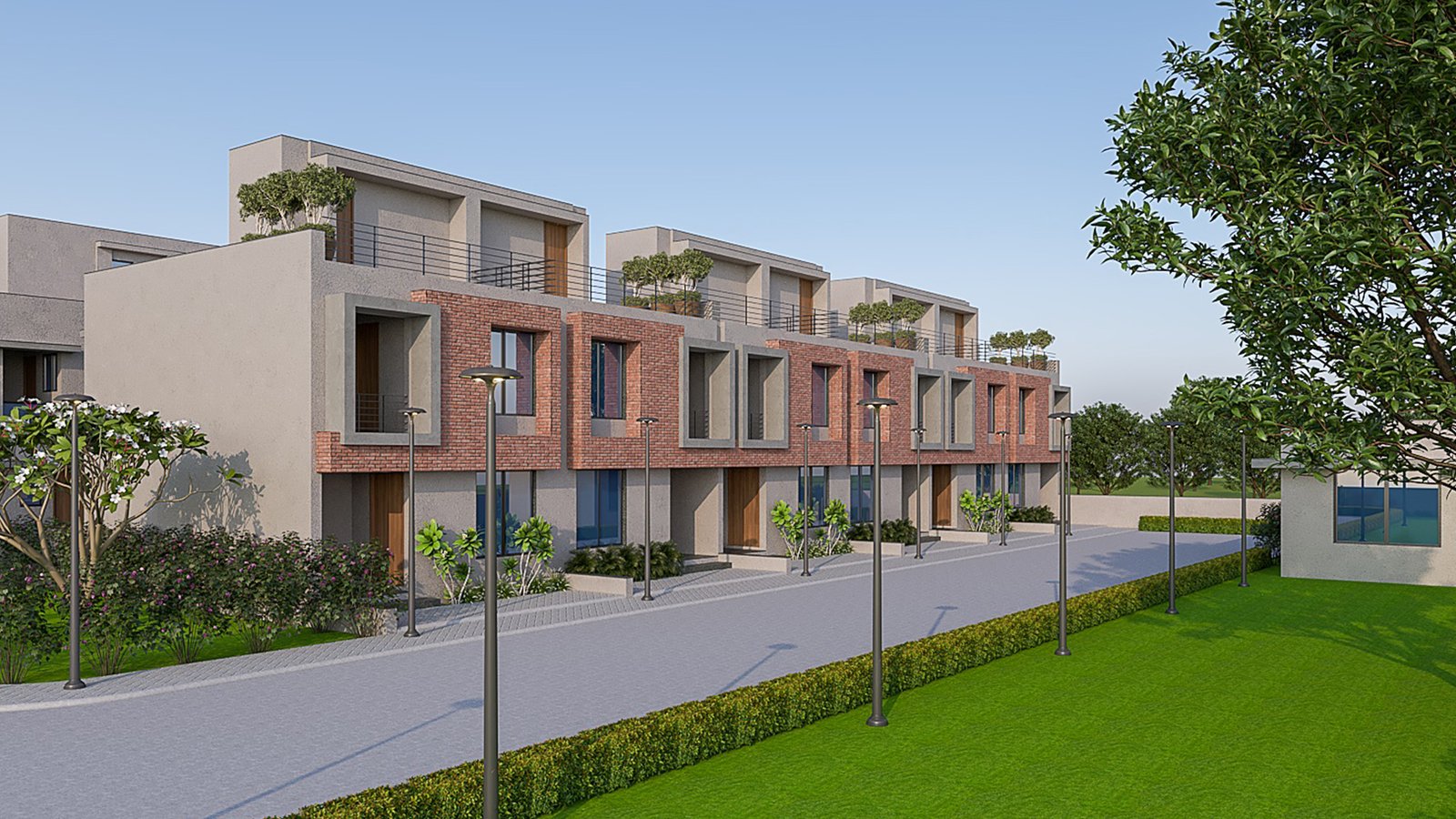
The ashram’s premises are a hub of various activities today, housed in original and newer buildings. In order to restore Gandhiji’s original ashram, it has been proposed to relocate the incongruous activities right on the periphery of the ashram in satellite campuses. The activities of the original ashram will be brought back within the ashram memorial premise.
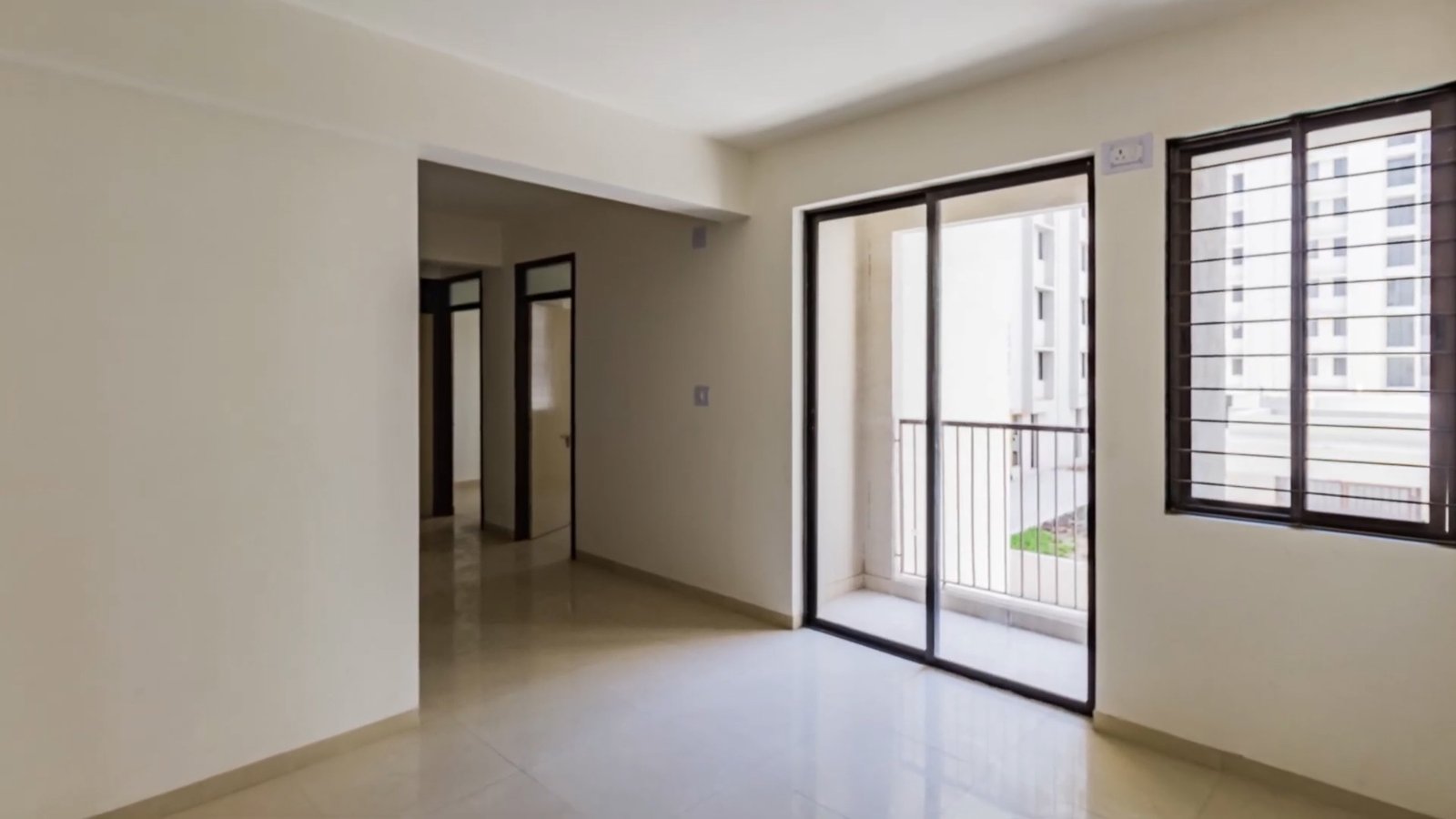
Ashramwasis, who are currently the tenants of various trusts, will be given ownership of new houses with upgraded facilities, located within 50 metres of their current dwellings.
Those who choose to move to a different location will be provided a generous compensation, or 4-bedroom homes, which are ready to occupy.


IMPROVING THE SURROUNDINGS
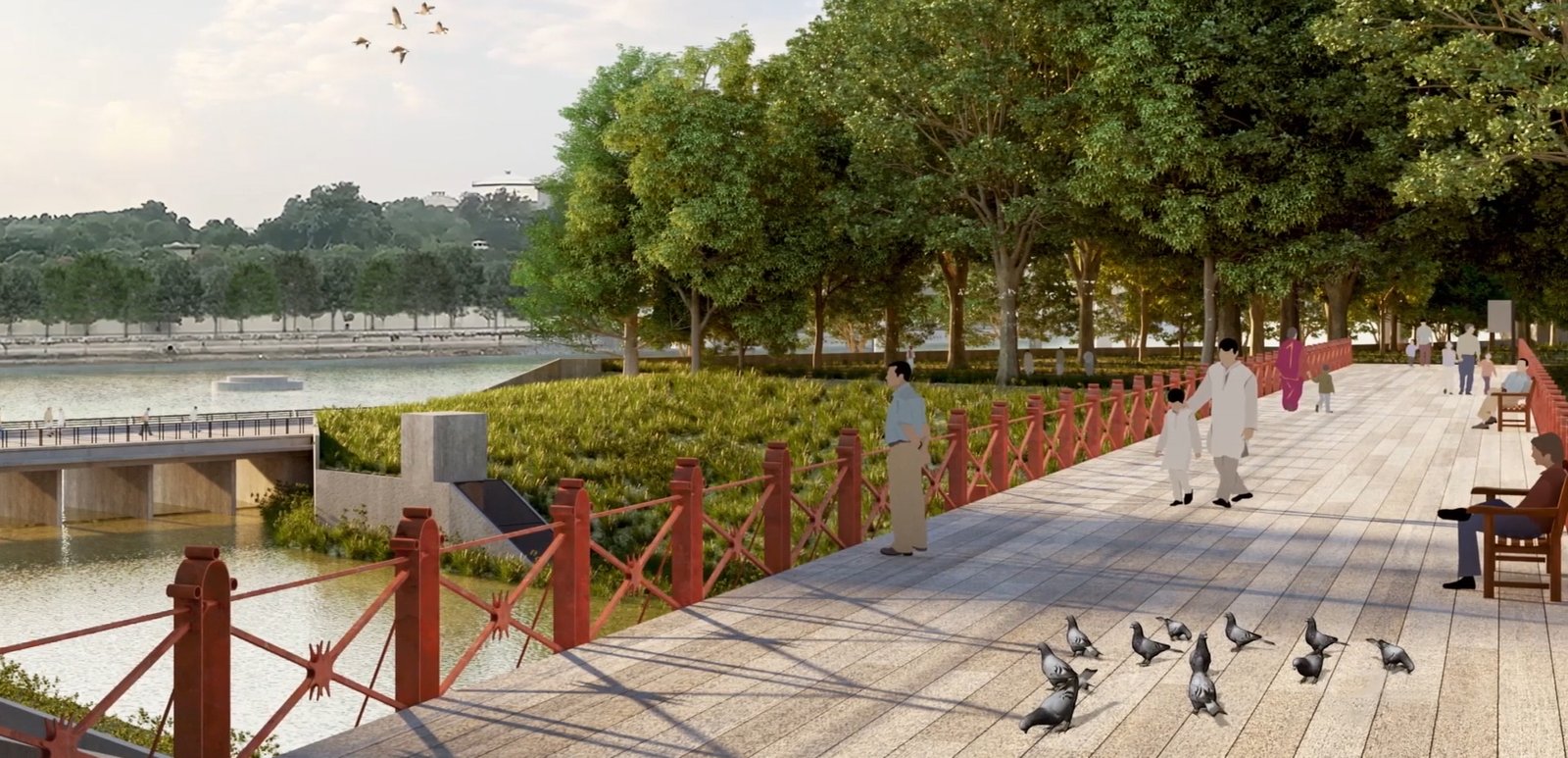
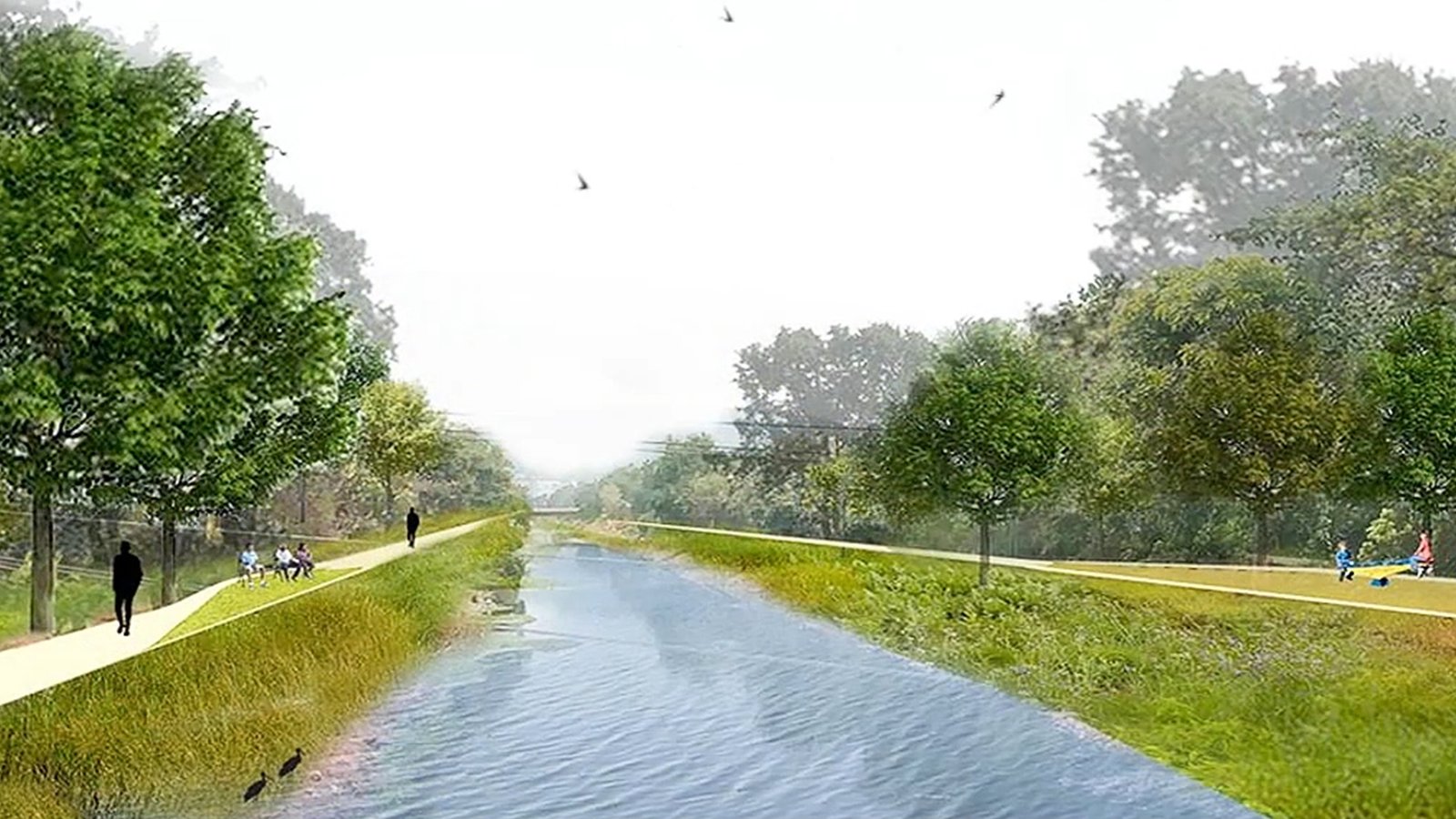
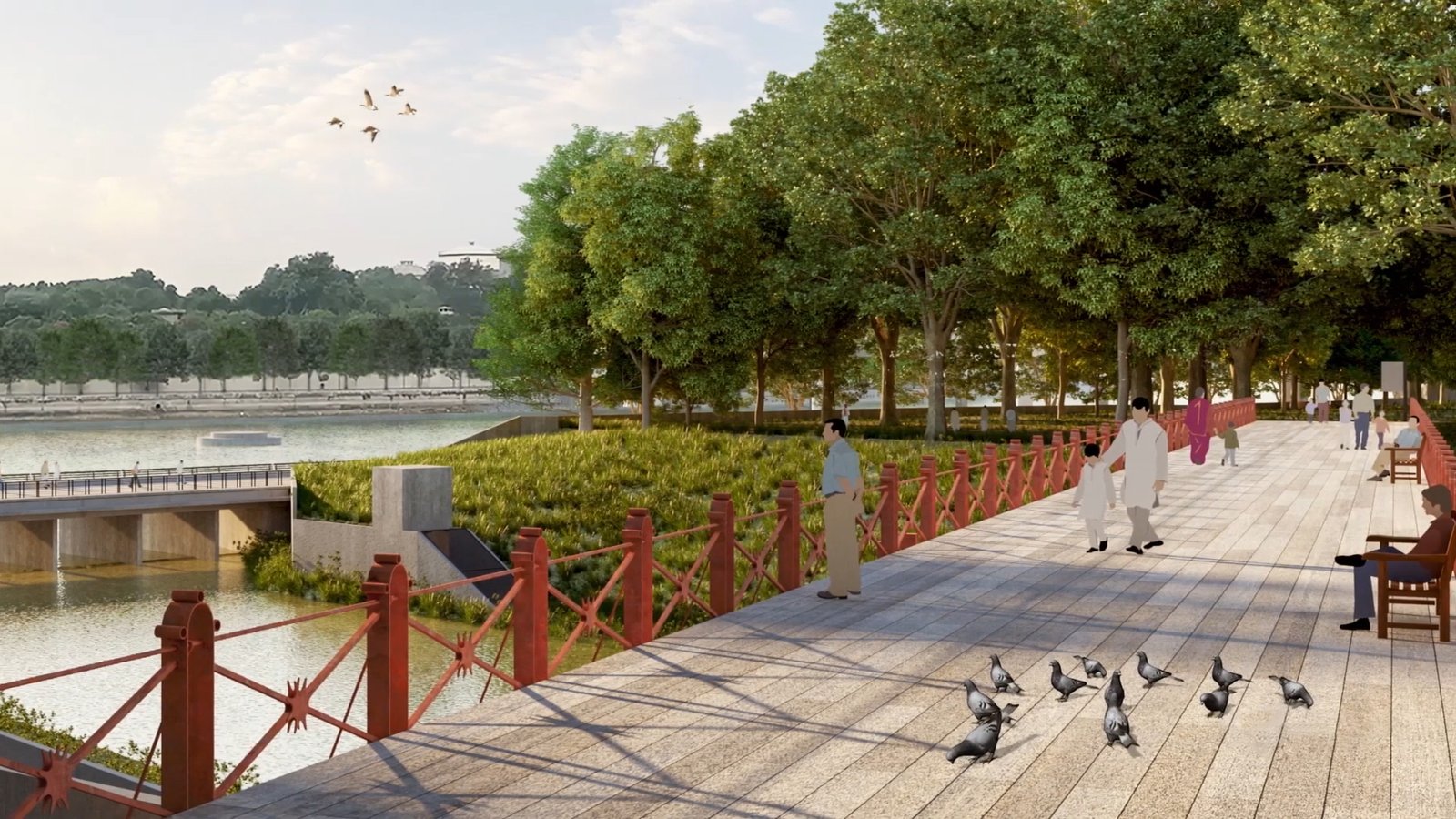
The ashram’s surroundings will also be improved to create an austere atmosphere for the visitors and the stakeholders. The Chandrabhaga rivulet will be transformed into a pleasant urban waterway. The Dandi Bridge will also be restored within the extended ashram premise. The overall infrastructure and amenities will be upgraded within the 120 acres.
Project funded by
The works will be managed by
In association with the
Trusts operating from the premises.
COST SUMMARY
| Sr. No. | Description | Cost (in Cr.) |
|---|---|---|
| A | Gandhi Ashram Precinct Development | 273 |
| B | Gandhi Ashram Memorial Development | 490 |
| C | Satellite Campus Development | 316 |
| D | Sub-Total Cost of Development (A+B+C) | 1,079 |
| E | Contingency | 86 |
| F | Design & Administration | 81 |
| G | Grand Total | 1,246 |